
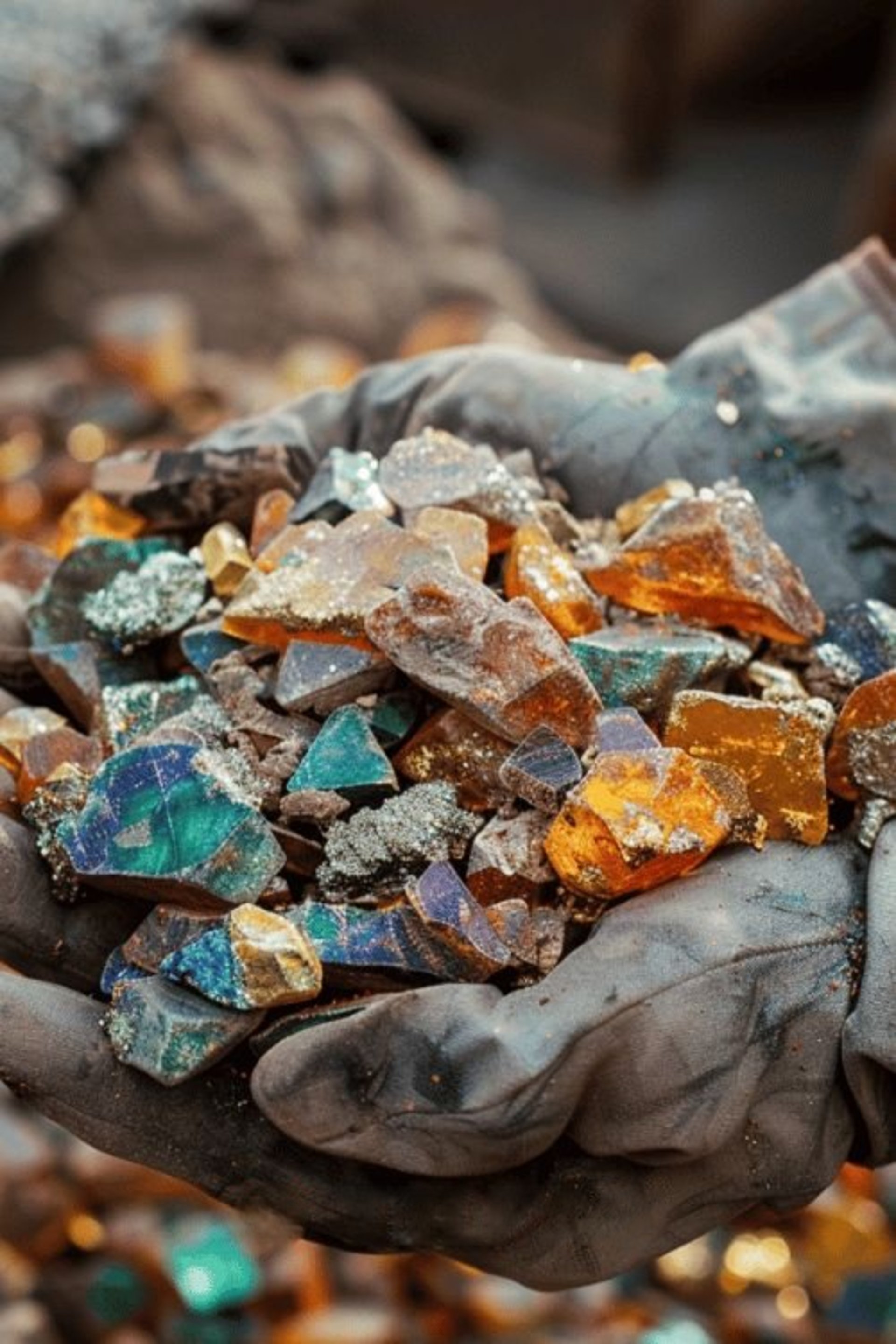
Rare Earth Elements
Discover how Rare Earth Elements power smartphones, EVs, renewable energy, and advanced defence technology. Learn why these hidden metals are critical to modern innovation and global supply chains.
RARE EARTH ELEMENTS
RudraSiddhi Team
12/1/20253 min read
Rare Earth Elements: The Hidden Metals Powering Modern Technology
Rare Earth Elements (REEs) are a group of elements that quietly propel technological advancement in the modern world of smartphones, electric vehicles, sophisticated medical devices, and renewable energy systems. These 17 metallic elements are vital to the modern defense capabilities, clean energy transition, and global economy, despite their continued lack of public awareness.
What Are Rare Earth Elements?
Rare Earth Elements consist of:
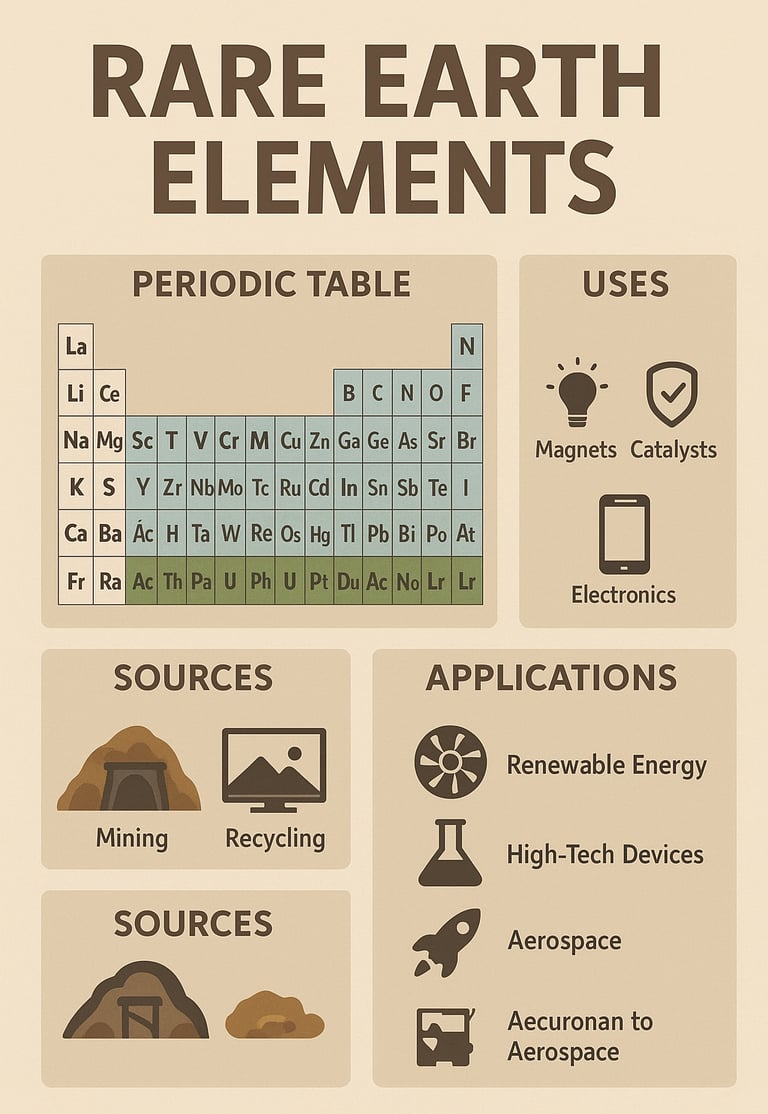
The periodic table's fifteen lanthanides (from lanthanum to lutetium)
Yttrium and Scandium are two related elements.
REEs are not actually rare, despite their name. Many are just as plentiful as nickel or copper. However, they are rarely found in pure form and are typically combined with other minerals, making extraction difficult, expensive, and environmentally problematic.
Why Are They So Important?
REEs possess unique magnetic, luminescent, and electrochemical properties that cannot be easily replaced by other materials. This makes them vital for:
Application Area Uses of REEs
Consumer Electronics Speakers, headphones, camera lenses, touchscreens
Clean Energy Wind turbines, batteries, solar panels
Electric Vehicles Permanent magnets, motors
Medical Sector MRI machines, scanning equipment
Defence & Aerospace Radars, guided missiles, night-vision devices
Lighting & Display LEDs, lasers, TV/display phosphors
Simply put, without rare earth elements, most modern technology would not exist.
The 17 Rare Earth Elements and Their Major Uses
Element Key Use
Neodymium Strong magnets in EVs & turbines
Europium Red color in LED displays
Cerium Glass polishing, car exhaust filters
Lanthanum Camera lenses, batteries
Dysprosium Heat-resistant magnets
Yttrium Superconductors, medical lasers
Terbium Green phosphors in screens
Scandium Aerospace alloys
Others Catalysts, electronic components
These elements, used in tiny amounts, enable massive technological advancements.
Where Are Rare Earth Elements Found?
REEs are widely distributed around the world, but currently:
Rare earth mining and processing are dominated by China.
Other nations that are attempting to boost production include the United States, Australia, India, Canada, and Brazil.
Many nations are concentrating on building local mining and recycling capacities in order to lessen reliance on imports because of their strategic significance.
The Rare Earth Supply Chain Challenge
Extracting REEs is not easy. The production process includes:
Mining
Chemical separation and refining
Manufacturing components using REEs
Out of these, refining is the most difficult due to:
Production of toxic waste
High energy needs
Intricate technology
This is why even if countries mine REEs, they still send them to China for processing — because China has the infrastructure and expertise.
This creates geopolitical concerns:
The defense and electronics industries may be affected by supply disruptions.
Countries are vying for access to these resources.
Environmental Impact of REEs
Rare earth mining can lead to:
Contamination of soil and water
Waste that is radioactive
Decrease in biodiversity
As a result, recycling used electronics (Urban Mining) is gaining attention. Researchers are trying to recover REEs from:
Old smartphones
Wind turbine magnets
Batteries
Industrial waste
Recycling not only reduces environmental damage but also strengthens resource security.
Future of Rare Earth Elements
Global demand for REEs is expected to rise sharply due to:
Growth of electric cars
Increased use of renewable energy
Growth in defense and digital technologies
Governments and industries are:
Purchasing substitute materials
Increasing the capacity of domestic mining and refining
Developing new technologies for recycling
In the future, access to REEs may decide which nations lead in technology and clean energy.
Conclusion:
Despite being hidden beneath the surface, rare earth elements are fundamental to the digital age we live in. These metals are crucial for economic growth and innovation, from satellites in orbit to smartphones in our pockets. Ensuring a sustainable and secure supply of rare earth elements (REEs) will continue to be a global priority as the world moves toward a cleaner and smarter future.
Rare earth elements are more than just resources; they are the building blocks of the technology that will influence our lives both now and in the future.
Learn More from Trusted Sources:
Why Container Cafés, Offices & Homes Are the Smarter Choice for Modern Spaces
How Shipping Containers Are Becoming the Next Passive Income Asset
India’s Export Diversification Gains Momentum Amid Steep Us Tariffs
Services
Your trusted partner in container solutions.
sales & lease enquiry
support@rudratechservices.com
+91-9156008629
© 2025. All rights reserved by Rudra Siddhi
Your privacy, our priority.
Help & Support – Container Leasing Made Clear
Get rewarded for every referral