

Global Container Homes Market Size & Growth (2024–2033)
Explore the Global Container Homes Market Size and Growth trends from 2024 to 2033, highlighting rising demand for sustainable, modular housing solutions, expanding market valuation, and projected CAGR driven by eco-friendly construction and affordable housing needs.
Rudrasiddhi Team
1/17/20266 min read
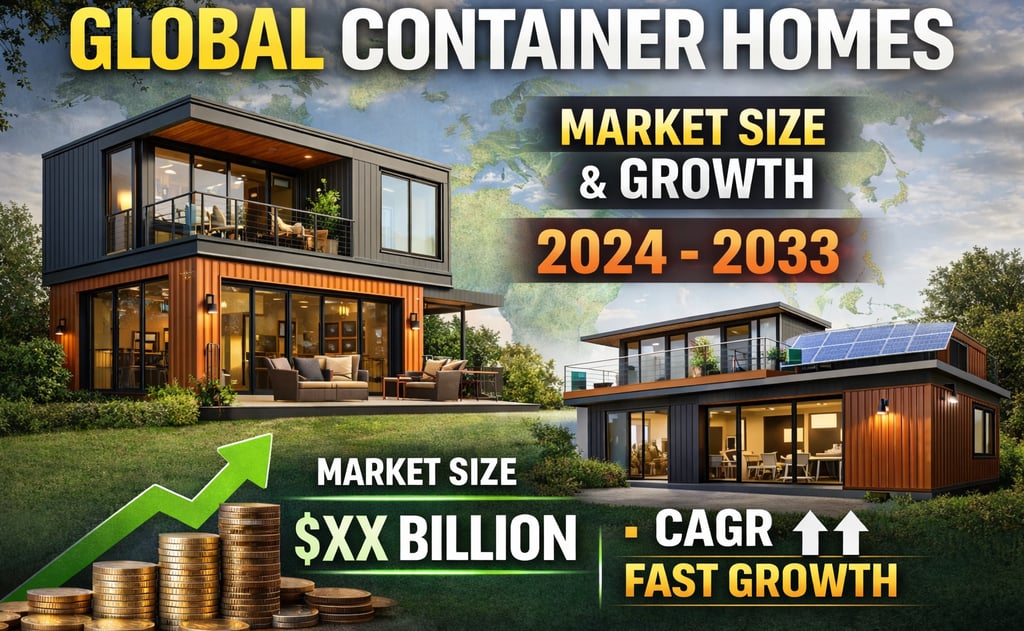
In the upcoming years, it is anticipated that the rapidly growing real estate and construction sectors will offer container home market participants a profitable environment. The container home market is made up of creative ways to construct homes or other infrastructure out of shipping containers. Container homes are popular among consumers worldwide due to three factors: affordability, flexibility, and sustainability.
Eco-conscious consumers find container homes appealing because repurposing shipping containers lessens the environmental impact of conventional building materials. Other advantages of container homes include reduced construction waste and low construction costs.
Because building a container home is much less expensive than building a traditional home, nearly everyone can fulfill their dream of becoming homeowners.
Container homes are more appealing to people looking for affordable housing because they provide greater flexibility and scalability than conventional housing.
The movable container home is a well-liked substitute that is expected to propel market expansion in the future. Container homes can be built quickly and used in a variety of settings. Over the coming years, container home companies are expected to benefit from the growing popularity of minimalist living and the widespread use of modular construction techniques.
Container Homes Market Segments Analysis
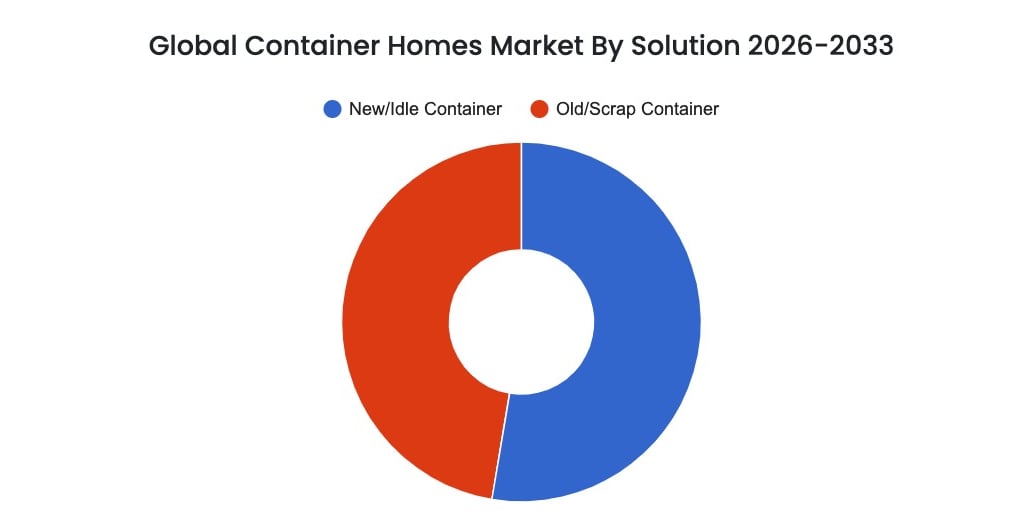
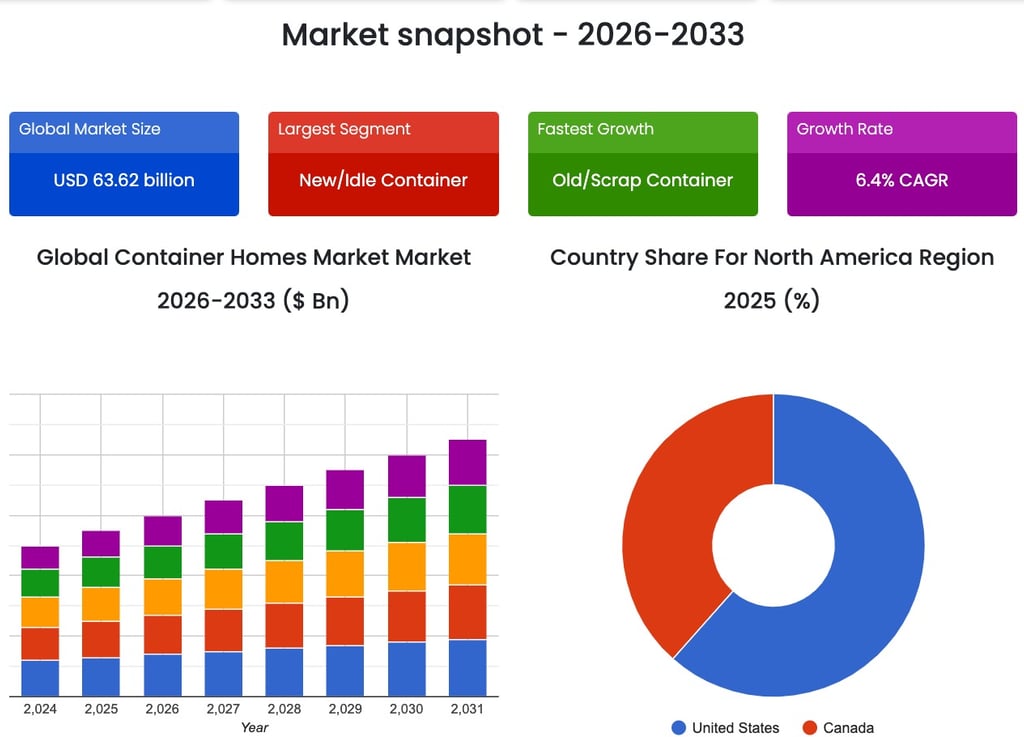
Type, Architecture Type, Construction Type, End User, and Region are the segments that make up the global container home market. The market is divided into Fixed and Movable segments based on Type. The market is divided into three categories based on the type of architecture: tiny houses, duplex/bungalows, and multi-story buildings/apartments. The market is divided into Old/Scrap Container and New Container based on Construction Type. The market is divided into residential, commercial, and industrial segments according to end users. The market is divided into North America, Europe, Asia Pacific, Latin America, and the Middle East and Africa.
Analysis By Offering
In terms of sales share, the market is currently dominated by on-site-built container homes. An on-site built container home is created by assembling and customizing shipping containers into livable structures right on the construction site. Homeowners and builders have total control over how their container homes are constructed, and they can personalize them while they are being built on site. Because they are more customizable than other types, on-site-built container homes are more aesthetically pleasing and environmentally friendly.
Because factory-built container homes are prefabricated at a factory and then simply transported to the desired location, removing the hassle of building for homeowners, demand for these homes is rising quickly worldwide. These homes are an excellent option for those seeking low-cost housing without the hassle because they are readily available, reasonably priced, and come in a variety of designs. As their popularity and emphasis on sustainability grow globally, prefabricated container homes are expected to generate significant revenue for the container home market.
Analysis By Application
Because more people are choosing residential container homes as an affordable housing option, it is anticipated that they will hold a significant market share in the upcoming years. The high market share of this segment is also a result of government initiatives that encourage the construction of container homes.
The demand for recreational container homes is expected to rise quickly worldwide as people seek out vacation homes that they can visit whenever they want to take a break from their hectic lives. Sales of recreational container homes are expected to increase globally in the future due to rising disposable income and a growing number of people choosing to travel during their free time.
Container Homes Market Regional Insights
North America has the highest concentration of container homes, which is directly related to the region's rapidly growing real estate market and high home prices. Long-term demand for container homes is predicted to be fueled by the United States' growing need for cheap housing. Future sales of container homes are also expected to increase as people in this area become more conscious of sustainable housing. Demand for container homes is also expected to increase due to the growing popularity of small-home and minimalist living in this area.
The demand for container homes in Europe is expected to grow in the upcoming years due to the popularity of eco-conscious and sustainable living among Europeans. A favorable environment for container home producers in Europe is also being created by the growing demand for energy-efficient homes and the willingness of European governments to support sustainable housing practices. Germany is expected to become this region's top market. Over the course of the projection period, North America and Europe are expected to continue to be the leading regional markets for container homes.
Container Homes Market Dynamics
Sustainability and Eco-Friendliness
Growing focus on environment conservation and evolving consumer preferences are also promoting sales of container homes. Container homes made with sustainable building materials and green building practices allow homeowners to feel environmentally responsible and drive market growth.
Affordability
Container homes can surely help people save a lot of money as compared to traditional housing. The homeownership dream of many can be fulfilled through container homes and this is why they are rising in popularity around the world.
Restraints
Building Codes and Regulations
Complying with different local and national building regulations can prove to be a challenge for container home manufacturers as there is no standard solution that applies to all regions. Besides most regions will have different mandates for traditional construction and container home construction. Insulation and Ventilation
Achieving proper insulation and ventilation in a container home is a challenge that companies will need to overcome if they want to provide comfortable and energy-efficient homes that people can live in, this is especially an issue in areas of extreme climate.
Container Homes Market Competitive Landscape
Due to the involvement of both construction and architectural firms in the worldwide container home business, the sector is extremely competitive. Additionally, there are many start-ups in the market that are concentrating on creating distinctive housing solutions based on containers. In order to optimize their economic potential in the upcoming years, container home companies are concentrating on the trend of minimalist living and the convenience of establishing a home without requiring a significant amount of finance. Additionally, container home manufacturers are concentrating on developing prefabricated and modular solutions that make it simple for customers to build and create their own home. Using sustainable methods in containers homemaking is also a trend that market players are focusing on to attract eco-conscious consumers around the world. Innovation and cost-effective container homes are what companies should provide if they want the best returns on their investments.
Top Players in Container Homes Market
SG Blocks, Inc. (USA)
ELA Container GmbH (Germany)
Giant Containers (Canada)
Supertech Industries (UAE)
Tempohousing (Netherlands)
SEA BOX, Inc. (USA)
Anderco Pte Ltd (Singapore)
Anderco Pte Ltd (Singapore)
HONOMOBO (Canada)
Almar Container Group (South Africa)
Container Homes USA (USA)
Speed House Group (UAE)
MODS International (USA)
Portable Space Ltd. (UK)
BMarko Structures (USA)
Falcon Structures (USA)
Container Build Group (Australia)
IQ Container Homes (New Zealand)
Rhino Cubed (USA)
Recent Developments
With the launch of our Smart Container tool in February 2024, we took pride in being the first company in the world to use IoT technology in logistics. Hapag-Lloyd plans to transform logistics in March after reaching this milestone. We are currently testing a new visibility tool called "Live Position" with a few key clients. For the first time, this cutting-edge device seeks to remove the "blind spots" in international logistics, enabling clients to make decisions in real time based on precise data.
In order to promote sustainable logistics methods, Container Corporation of India Limited (CONCOR) and DB Schenker established a strategic alliance in December 2023.
Container Homes Key Market Trends
Sustainability & Eco-Friendly Living: Container homes are particularly well-suited to the growing global emphasis on sustainability and eco-conscious living. Compared to traditional housing, container homes are more environmentally friendly because they are built from recycled shipping containers. Container homes are becoming more and more popular due to their high usage of environmentally friendly building materials and techniques
Modular and Scalable Design: Homeowners may easily and stylishly expand and customize their living area because to container houses' flexibility and scalability. This flexibility is further enhanced by the modular design of container homes, which also fits with the contemporary, minimalist style of architecture that is becoming more and more popular worldwide.
FAQ’s
1.What is the global market size of the Container Homes Market?
The size of the global container homes market was estimated at USD 67.69 billion in 2024 and is expected to increase at a compound annual growth rate (CAGR) of 6.4% from USD 72.02 billion in 2025 to USD 118.31 billion by 2033.
2. What is the key driver of the Container Homes Market?
Sales of container homes are also being boosted by changing customer preferences and an increasing emphasis on environmental conservation. Green building techniques and sustainable building materials enable homeowners to feel environmentally conscious and stimulate market expansion.
3.What is the key market trend for the Container Homes Market?
Sustainability & Eco-Friendly Living: Container homes are particularly well-suited to the growing global emphasis on sustainability and eco-conscious living. Compared to traditional housing, container homes are more environmentally friendly because they are built from recycled shipping containers. Container homes are becoming more and more popular due to their high usage of environmentally friendly building materials and techniques
Related Resources
40 Feet Container Rent in India
Used 40 Feet Container Price in India – Complete 2025 Guide
The Definitive Guide to Used Cargo
Services
Your trusted partner in container solutions.
sales & lease enquiry
support@rudratechservices.com
+91-9156008629
© 2025. All rights reserved by Rudra Siddhi
Your privacy, our priority.
Help & Support – Container Leasing Made Clear
Get rewarded for every referral